
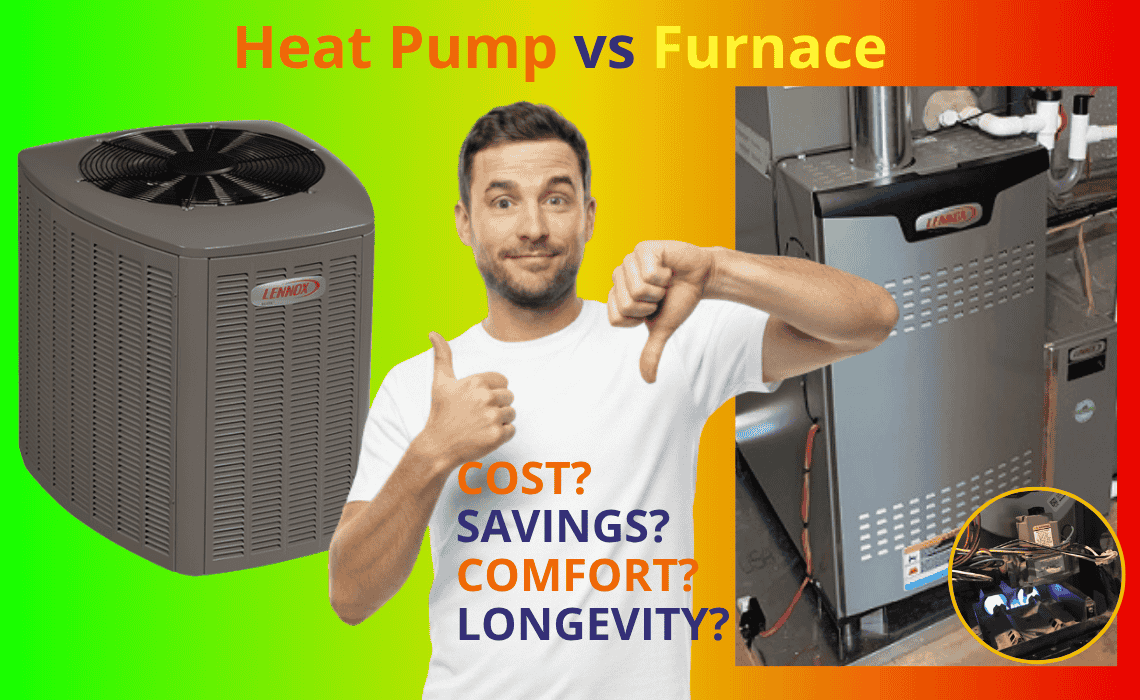
Is your furnace getting old? Maybe that old oil/propane furnace is spewing fumes, and it’s a hassle getting refills for your oil or propane tank. And then there’s the outrageous heating bills…they are climbing all the time.
If you’ve started comparing heat pump vs. furnace systems, you’re not alone. Many homeowners are now asking whether switching to a heat pump could save money, improve comfort, or even make their homes more energy efficient.
Good news!! There has been no better time to convert to electric heat pumps for your home than right now! The tax credits and substantial rebates being offered in the U.S. have made heat pumps a very attractive option.
Do you know that you could combine a heat pump and traditional furnace for a ‘dual fuel’ system which can save you the most money on heating bills?
Read on and let’s get you started on the best heating system hand-in-hand and save you money!
And when you need a qualified professional for your heat pump and furnace, give SuperTech a call!! Our experts in heat pumps and furnaces are ready and waiting to install your product. You can book us for thorough maintenance checks to keep your heating system running smoothly for a long time, and your heating bills as low as possible.
Heat Pump or Furnace? Let’s Help You Decide
1) How does a Furnace Work?
Most furnaces use one of three fuels to heat your home: 1) natural gas (the most popular), 2) oil, or 3) propane for homes without a gas line. Of course, an electric furnace doesn’t need fossil fuel, but it can be quite expensive to operate in the long run.
Your furnace operates pretty simply: it burns fuel to generate heat. The fuel gets ignited, the burning or combustion heats a metal ‘heat exchanger’, and the heat exchanger heats air that is blown over it. Finally, the heated air is blown or ‘forced’ through ducts and vents to every room in the house - which is why furnaces are ‘forced air’ systems.
We’ve included this helpful video to give you a better understanding of how a furnace works.
Though furnaces are generally safe, they are considered more dangerous than heat pumps. Why? Furnaces have the possibility of a carbon monoxide build-up, which is rare, but it can have deadly consequences.
Even though furnaces are built to the best standards, don’t forget that your indoor unit needs regular, professional check-ups to catch small problems before they become big hazards.
2) How does a Heat Pump Work?
Heat pumps don’t generate heat like a furnace, they just transfer heat by collecting it outside and bringing it inside. In fact, they work just like an air conditioner, but in reverse. Outside, your heat pump creates a super-cold refrigerant by lowering its pressure a lot. Now the outside air is warm - in comparison(!) - and the refrigerant collects the extra heat. The refrigerant is pumped back inside, the pressure and heat are concentrated…and you have heat for your home!
Watch this quick video to learn more about how a heat pump works.
Running an electric heat pump is incredibly energy-efficient compared to furnaces, up to 3 times as efficient! Even though electricity to run the pump is more expensive than gas, the efficiency can lead to cheaper heating bills. It’s also why there are subsidies in the U.S. now supporting heat pump installations to reduce the country’s heat energy usage (see installation costs, below).
Is it even possible to collect heat outside when the outdoor temperature is below freezing? Yep, it is!! Technology advances have allowed standard heat pumps able to collect some heat down efficiently to freezing temperatures, and specialized heat pumps work even down to -15 ℉ (-9 ℃).
Standard heat pumps work best at temperatures down to freezing and become less and less efficient below freezing temperatures. That means you have to consider your climate carefully when deciding to invest in a heat pump, dual fuel heat pump, or furnace, so keep on reading to get all the details!
3) What’s A Dual Fuel Heat Pump?
Your normal, air source heat pump can efficiently provide heat for a house all year long if the temperature doesn’t go below freezing too often. Below freezing you will need an auxiliary heat source to supplement the heat pump, and that’s often an electric heat kit.
But electric heat kits are costly to operate, so they aren’t an efficient option if you have too many cold days in a year.
That’s where dual fuel heat pumps (or hybrid systems) step up. Dual fuel heating systems are a heat pump AND furnace together. When the outside temperature is too cold for the heat pump, the furnace is switched on. On cool days, the heat pump is used.
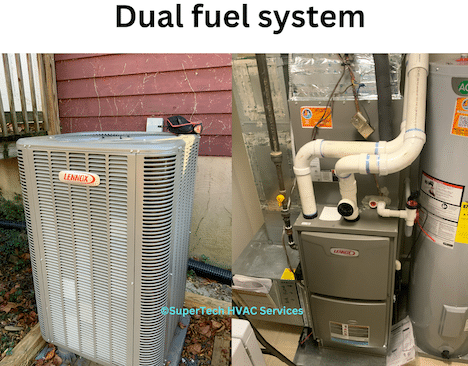
In other words, dual fuel systems are very efficient because they always choose the most efficient way to heat!
You are probably asking yourself: is it worth it to have a dual fuel heat pump? Yes! This is especially true if you have an existing furnace, because converting to dual fuel requires you to just replace the air conditioner with the heat pump.
It’s a great time to save on heat pump and dual fuel heat pump installations, so let’s dive right into a detailed look at the costs.
Get the Best Heating Solution for Your Home Now
4) How Do The Installation Costs of Heat Pumps, Furnaces, And Dual Fuel Heat Pumps Compare?
Let’s break it down from the simple scenarios to the more complex ones. And remember the rebates and tax credits we’ll cover in Section C can make a huge difference in your final cost.
A) Install the heating system first time: Heat Pump vs. Furnace

Buying an existing home? In most new construction, the builder takes care of installing the heating system. If your community has a natural gas line, the builder will often go with a central AC and natural gas furnace combo, which is the most common type of system. In areas without natural gas, builders typically choose a heat pump, propane, or even oil heating instead. Dual fuel systems (a heat pump paired with a furnace) are rarely installed by default, since the equipment is more expensive upfront, even though they can save money on energy costs in the long run.
Building a custom home? This is where you get more of a say in your heating system. Builders usually recommend the same go-to setups: AC and natural gas furnace where gas lines are available, and heat pumps where they aren’t. That said, if you’re interested in a dual fuel system and your builder offers it, you might want to consider the option, as it’s a smart middle ground between efficiency and reliability.
B) Replacement or Retrofit Costs
Heat pump vs dual fuel
Already have a heating system in place? Things get a little more nuanced here. The cheapest and simplest route is usually just replacing what you already have. Swap out an old furnace for a new one, or upgrade your aging heat pump to a more efficient model.
Converting to a heat pump system is usually more expensive up front. Why? A heat pump costs more than just an AC unit, and on top of that, you may need extra electrical work and duct modifications to make the switch. This process is often called “electrification,” since heat pumps run entirely on electricity to both heat and cool your home.
But here’s where it gets interesting. Incentives can totally change the equation. Rebates and tax credits (more on that in the next section) can make a heat pump or dual fuel setup much more affordable than you might think.
If you’re ready to switch, you’ve got two main paths:
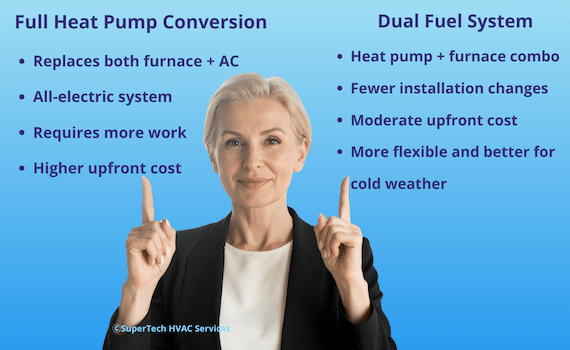
- Full Heat Pump Conversion: Replace both your furnace and AC with a heat pump and air handler system. This is the all-electric, cleaner option. Just keep in mind, retrofitting often means running new control wires, installing a 240v circuit, possibly upgrading your electric panel, and tweaking ductwork. All of these factors add to the initial cost.
- Dual Fuel (Hybrid) Heat Pump: Replace your existing furnace and AC with a heat pump plus furnace combo. The equipment itself usually costs more than a heat pump with an air handler. This installation usually requires fewer changes, often just running some new control wires, while still giving you flexibility and efficiency.
So, while a straightforward replacement might seem easiest, incentives often tip the scales, making dual fuel or full conversions the smarter long-term investment.
C) How to Save with Tax Credits and Rebates

The sticker price isn’t the whole story. Between federal tax credits and rebate programs, you could save thousands, plus enjoy lower utility bills for years to come.
Federal 25C Tax Credit (available in all states):
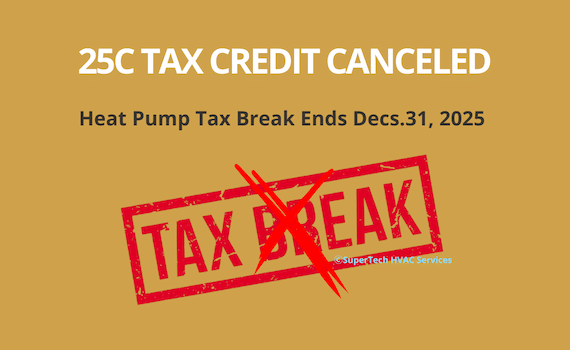
The Energy Efficient Home Improvement Credit, also called 25C, is a big one. Thanks to the Inflation Reduction Act, homeowners can claim 30% of the installation cost, up to $2,000 per year, when installing a qualifying heat pump. To qualify, the system usually needs to meet ENERGY STAR® standards, and you’ll need at least $2,000 in federal tax liability to take full advantage.
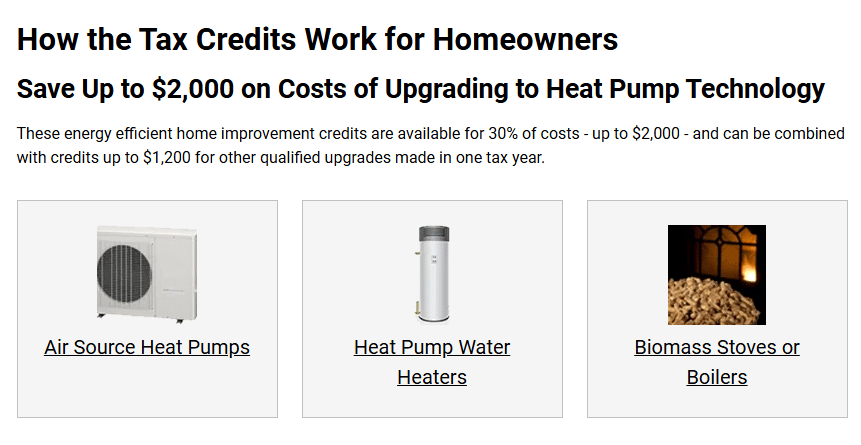
Claiming is simple: just file it with your federal tax return. For a step-by-step breakdown, check out our full guide on the 25C tax credit.
The credit was originally designed to run through 2032, but current legislation has shortened it, making 2025 the final year to claim it under existing rules.
Check If Your Home Qualifies for Heat Pump Rebates Now
Federal Funding, State Implementation (HEAR & HOMES):
HEAR (Home Electrification and Appliance Rebates): Up to $8,000 off at the point of sale for qualifying heat pumps. Low-income households can get 100% covered (up to $8,000), while moderate-income households can get 50% covered (up to $8,000). High-income households aren’t eligible.
HOMES (Home Owner Managing Energy Savings): Rebates up to $8,000 based on measured energy savings (must cut energy use by at least 20%). These come after installation, not upfront.
As of May 2025, 11 HEAR programs and 5 HOMES programs are live. States offering both include D.C., Georgia, Michigan, North Carolina, and Wisconsin. HEAR is also active in AZ, CA, CO, ME, NM, NY, and RI.
State Programs
If your state hasn’t launched HEAR or HOMES yet, the chances of new federal rebate programs appearing are slim when Republicans are in office, since they are generally less supportive of electrification incentives.
But don’t worry, many states have their own electrification programs. For example:

Mass Save and Empower Maryland programs
In Massachusetts, the MassSave program makes switching to heat pumps much easier on the wallet. Full electric conversions, where the heat pump becomes your only heating system, qualify for $3,000 per ton of capacity (up to $10,000). Since the average single-family home (1,500–2,500 sq. ft.) typically needs a 2.5–3.5 ton system to meet its heating needs, most households can qualify for the full $10,000 incentive. Dual fuel conversions, where a heat pump works alongside a furnace or boiler, still earn $1,250 per ton.
In Maryland, the EmPOWER Maryland program helps homeowners replace old fossil-fuel systems with modern heat pumps by offering up to $8,000 in rebates. That includes $5,000 toward the heat pump itself plus up to $3,000 for upgrades like ductwork or electrical improvements.
Ready to take advantage? If you’re in Maryland, reach out to SuperTech today to get started. Not in Maryland? No problem, be sure to check your state’s programs before scheduling your installation.
5) A Heat Pump Or Furnace More Expensive To Run And Operate?
To save money on heating bills, it’s important to choose a system that fits your local climate.

Heat Pumps: Best for Mild or Warm Climates
Heat pumps are incredibly efficient at moderate temperatures because they move heat instead of creating it by burning fuel. They can be up to three times more energy efficient than a typical furnace (measured by AFUE, Annual Fuel Utilization Efficiency).
If you live in a mild or warm climate with only a few freezing days each year, a heat pump will likely be the most cost-effective option. On very cold days, you may need a small backup heater, but most of your heating needs will be covered by the heat pump.
Furnaces: Better for Cold Climates
In very cold regions with long stretches of freezing temperatures, furnaces are often cheaper to operate. Heat pumps lose efficiency as temperatures drop, so furnaces are still the go-to in harsh winters. However, check your state’s energy programs, sometimes rebates make adding a heat pump worthwhile even in cold areas.
Dual Fuel: Best of Both Worlds
For moderate or variable climates, a dual fuel system (heat pump + furnace) gives you the lowest overall operating cost. When it’s cool, the heat pump runs efficiently. When it gets cold, the furnace automatically takes over. This smart switch between systems keeps your home comfortable and your energy bills low.
6) Maintenance Costs Of Heat Pumps, Furnaces And Dual Fuel Systems
Now let’s consider how much money it takes to maintain your heating system, because maintenance requirements could affect your decision of what heating system to install.
This includes 1) check-ups twice a year to keep your system running smoothly, and 2) how costly repairs are.
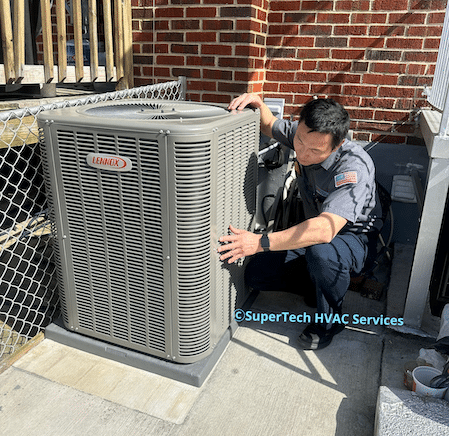
You might think that because a heat pump feels like new technology, it will be the most expensive to maintain…but that’s not the case.
In fact, oil furnaces are the most expensive and most difficult heating system to maintain. Oil furnace repair can get costly because they are more complex than other furnaces. Some challenging repairs might even have you scrambling to find a technician capable of the repair. Not only that, older furnaces have had to get expensive upgrades to meet environmental regulations on how much pollution they release.
You might be surprised, but a dual fuel system does NOT double your maintenance costs. In fact, many people already have a gas furnace and air conditioner combined, and those maintenance costs are roughly the same as for a dual fuel heating system! Heat pumps are only a little more complicated than an AC, so maintenance and repairs don’t change that much.
It’s usually a little cheaper to maintain a standalone gas furnace (i.e. no AC) than a standalone heat pump. Typically, but not always, repairs are more straightforward for gas furnaces.
Just a reminder that it doesn’t matter what heating system you have, the best way to keep repair costs down is with regular maintenance by a professional, like our qualified technicians at SuperTech. They keep your furnace or heat pump operating efficiently and for a long time.
7) How Do The Lifespans of Furnaces, Heat Pumps and Dual Fuel Systems Compare?
You want to invest your money in a heating system that will last a long time.
How long your system lasts depends a lot on how much it runs: the more it runs, the more wear and tear on the components - and the shorter its lifespan.
Furnaces only heat during the winter, summer is ‘furnace-vacation’ time! A well-maintained furnace is expected to last 15-20 years.
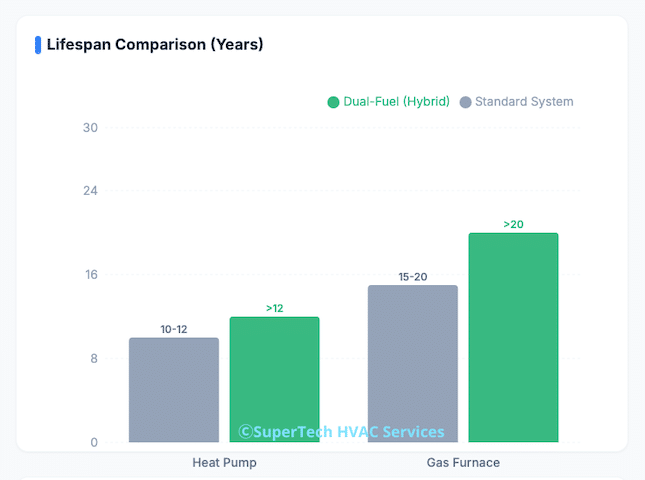
Lifespan comparison of common HVAC systems
Heat pumps are different, though, because they put in double-duty: during winter they heat, and in warmer months they function as an AC to cool your home. In other words, they run more than a furnace, have more wear and tear, and the lifespan of a well-maintained heat pump is about 10-12 years.
Dual fuel heating systems are expected to increase the lifespan of both furnace and heat pump because they share the work load. The furnace runs on the coldest days, and the heat pump otherwise. Each receives less wear and tear, and that extends their lifespan.
Remember: lifespans are for well-maintained systems. Regular maintenance reduces wear and tear. Small problems get fixed before they cause ‘big’ wear, and you extend the heating system’s lifespan.
8) Are Heat Pumps Safer Than Furnaces?
Heat pumps have the advantage over gas and oil furnaces for indoor air quality because they don’t burn fuel.
In fact, normally a heat pump doesn’t affect your air quality at all, and you’ll have the bonus that in winter the air isn’t as dry as with a natural gas furnace (see the next section for why).
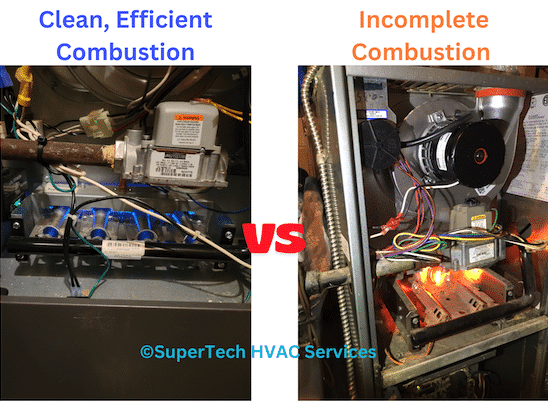
Furnace flame colors
A well-maintained furnace affects your air quality just a little if they are running smoothly and burning the fuel cleanly and completely. The amount of gases released is quite small.
Problems start if the furnace doesn’t burn cleanly/completely because a component breaks down or isn’t maintained. If that leads to partial combustion, then some carbon monoxide will be released, and carbon monoxide can be very dangerous.
Don’t panic: There are several switches in the furnace that check the gas going in and how well it burns. Their job is to stop the furnace if it isn’t burning the fuel properly. But it can happen that there is just enough combustion so that the furnace keeps running, but some carbon monoxide is leaking out and building-up.
Carbon monoxide is dangerous because you can’t smell it, and it’s deadly if you breathe in too much. A carbon monoxide detector is always recommended near your furnace.
Furnaces are built to high standards to keep you as safe as possible, but keep it well-maintained and have a carbon monoxide detector.
9) Do Heat Pumps Have A ‘Nice’ Heat?
People who have furnaces and like the feel of hot air coming from the vents will be surprised that the air coming from a heat pump feels much cooler.
Is the air from heat pumps too cool? Let’s look at it in detail: Furnaces push air that is roughly 130 ℉ (55 ℃). This is a lot warmer than your body temperature, so it feels hot coming out of a vent.
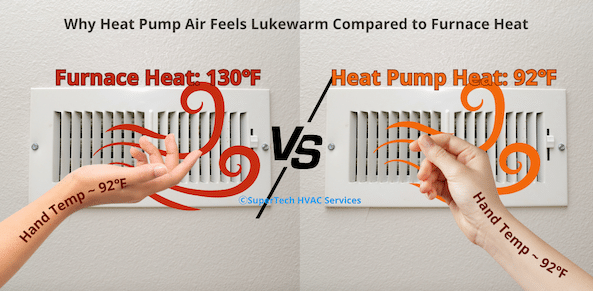
The air coming from a heat pump is up to 92 ℉ (33 ℃) …that’s more than enough to heat a room to room temperature (72 ℉, 22℃), but it is also less than body temperature.
In other words, the warm air from a heat pump is enough to heat, but feels cool because it’s less than body temperature.
Is this a problem? Well, the final room temperature is the same for a furnace or heat pump, but some people find the hot air from a furnace as feeling more comfortable. In the end, you’ll have to decide for yourself.
On the plus side, heat pumps dry out the air much less than furnaces do. Anyone with dry skin in winter will enjoy the improved comfort of a heat pump.
Furnace heated air temperature is about 130 °F, you have a noticeable variation in temperature
The air temperature coming out of a heat pump is only about 92 °F, you have a more uniform temperature.
10) Verdict: Should You Choose A Heat Pump, Furnace Or Dual Fuel System?
As we stated right at the beginning: you have to choose the right system for your climate. Heat pumps are great for mild climates combined with electric baseboard backup heat.
Homes in colder climates benefit from dual fuel heating systems that combine heat pumps and gas furnaces. Two systems can be cost-effective in the U.S.A. right now because of the huge impact of the 25C tax credits and rebates on heat pump costs. Dual fuel systems save you money on your heating bills by switching between the heat pump and furnace.
Those in the coldest areas might decide to go with just a furnace installation, although check with your specific state's recommendations. There may very well be enough cool days to still recommend adding a heat pump for a dual fuel system.
11) Closing
Investing in a heating system is a big commitment, and it's important to weigh both the pros and cons before making a decision. With our help, you’ve got the information you need to make a confident, informed choice.
One thing is certain: there won’t be a better time than right now to save money on installing heat pumps and combining furnaces with heat pumps because of government subsidies.
And the bonus is that by choosing the right heat pump/furnace, you will be saving money on heating bills going forward!
Look to SuperTech for smooth installations of heat pumps and furnaces by qualified professionals. And every year we do thousands of maintenance checks that keep your heat pump and furnace running smooth, your heating bills low, and extend the system’s lifespan.
Give SuperTech a call today to install and maintain your heat pump and furnace!!